As the commercial sector gears up for 2026, investors are weighing up where the strongest returns are likely to come from.
With commercial yields outpacing residential and demand shifting across retail, office and industrial, the year ahead is shaping up to be one of recalibration and opportunity.
For those thinking of entering the commercial market in 2026, we look at what you can expect of the key asset classes.
INDUSTRIAL
Industrial assets on the Gold Coast are positioned to outperform this year strengthened by tight vacancy rates, accelerating population growth, and an economy that is diversifying at pace.
As the population grows, service industries such as construction, health, technology, and the SME sector will become heavy consumers of industrial space, creating a demand profile that is resilient and stable.
However, the supply of industrial-zoned land, particularly in centrally located or coastal precincts, remains extremely limited, elevating the value of existing assets and further increasing the appeal for investors.
Improved infrastructure will also continue to be a key driver of the sector in 2026.
Upgrades delivered under the South East Queensland City Deal, including improvements to key transport corridors, motorway interchanges, the Light Rail network, and the Gold Coast University Hospital precinct, are reshaping the city’s industrial ecosystem.
New arterial road connections and enhanced freight routes have created high-value industrial nodes with improved accessibility and efficiency, strengthening tenant demand and supporting sustained capital appreciation.
Together, these forces are creating one of the most compelling industrial investment environments in the country, with appetite remaining strong from local and interstate buyers seeking stable income and long-term growth.
RETAIL
The search for defensive income streams will continue to underpin pricing across retail this year. Private investors are expected to remain highly active, with competition likely to keep yields tight. As an example, a supermarket-based asset in Tugun last year traded with a 3.94 per cent yield.
Institutional confidence will also remain. Charter Hall’s $125.5 million acquisition of the mixed-use Southport Park Shopping Centre – anchored by three supermarkets – in November is a good example of the strength and resilience of well-located, essential-service retail, which is expected to be strong throughout 2026.
Lifestyle precincts are expected to experience strong rental growth this year, with premium retail space now achieving more than $1,500 per square metre. Rental returns and high occupancy levels supported by population growth, rising household incomes and continued tourism activity will see demand for these assets grow. Centres anchored by supermarkets, essential services, food and beverage operators and lifestyle retailers are likely to remain the strongest performers.
Continued significant investment in infrastructure by the State Government in 2026, particularly along key transport corridors, will further enhance accessibility, expand retail catchments and support the demand for well-positioned retail assets across the Gold Coast.
OFFICE
The Gold Coast office market is set to perform strongly, underpinned by limited supply and consistent tenant demand.
Vacancy levels for A-grade office space remain exceptionally low, about 2.7 per cent, highlighting a shortage of high-quality office accommodation. Across the broader market, vacancy rates are sitting at about 6 per cent, with the most available space concentrated in older or lower-grade buildings rather than premium stock.
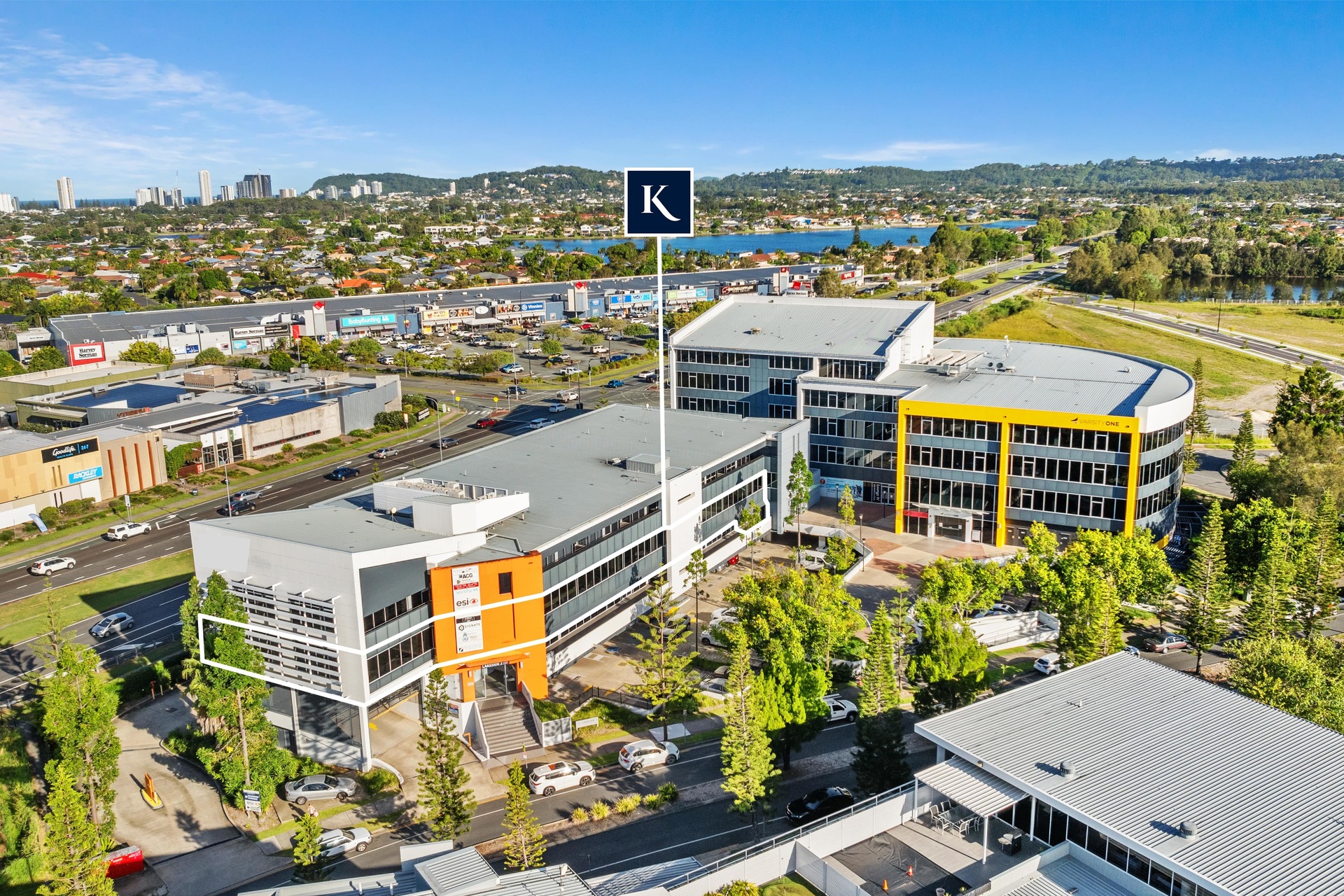
Key office precincts in suburbs such as Bundall, Varsity Lakes, Robina and Broadbeach remain particularly tight, with vacancy in many locations below 5 per cent. A lack of available space has supported rental levels and continued to attract investor interest.
Limited new office development in recent years, combined with rising demand from businesses seeking modern, well-located office space will continue to drive the market. Fewer options mean tenants are competing for quality space, which will keep vacancies low and leasing activity steady in the year ahead.
While demand for lower-grade offices has softened, A-grade office space continues to outperform, with rising rents and minimal incentives being offered by landlords. This demand is being driven by growing sectors on the Gold Coast, including professional services, technology, education, and healthcare.
Overall, the sector is well positioned to remain resilient and less volatile than larger CBD office markets impacted by hybrid working trends in 2026.
For more guidance on investing in the commercial sector in 2026, reach our experienced commercial team of Adam and Tony Grbcic, who can advise you on the asset classes that will best fit your portfolio.